
H1- The Quiet Revolution Happening Around Us
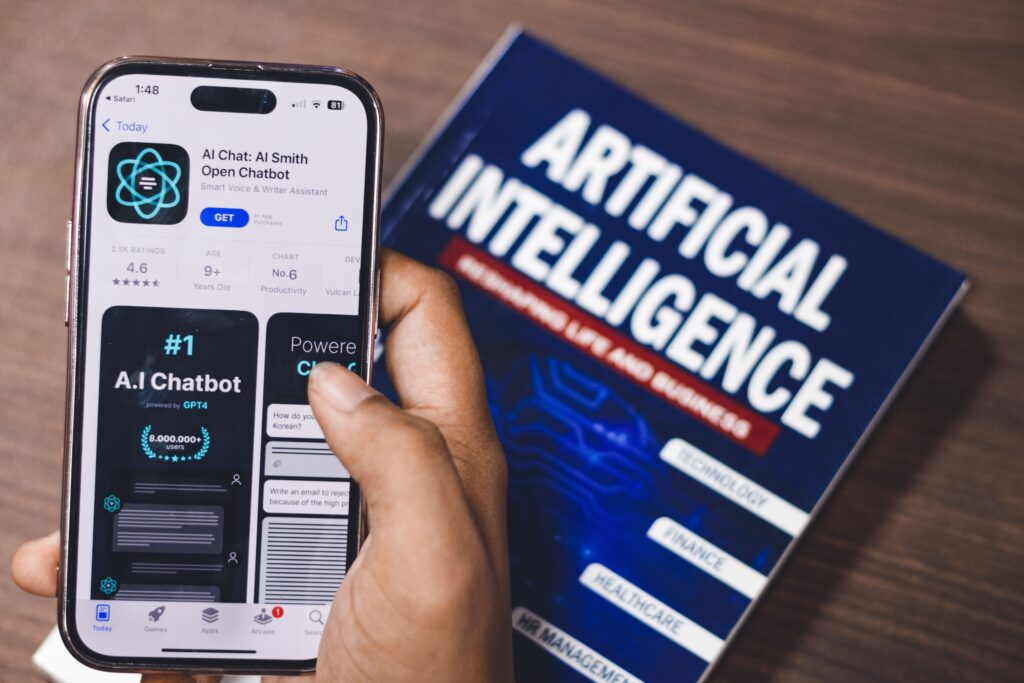
Artificial intelligence often gets discussed as if it’s a distant technology that belongs to giant corporations or science fiction movies. In reality, AI has quietly become part of everyday work for millions of people. Whether someone realizes it or not, chances are they already interact with AI several times a day.
From writing emails and organizing schedules to analyzing data and creating presentations, AI tools are reshaping how work gets done. But unlike previous technological shifts, this one isn’t simply about replacing manual labor. It’s about reducing repetitive tasks and allowing people to spend more time on creative thinking and decision-making.
The workplace isn’t becoming less human.
In many ways, it’s becoming more focused on the uniquely human skills that machines cannot easily copy.
H2- AI Is Becoming an Everyday Assistant
A few years ago, using artificial intelligence required technical knowledge. Businesses needed developers, expensive software, and specialized infrastructure. Today, many AI-powered tools work through simple web interfaces that almost anyone can use.
Students use AI to summarize research papers.
Freelancers use it to brainstorm ideas.
Small business owners use it to write product descriptions.
Office workers use it to organize meetings and automate reports.
Rather than acting as a replacement, AI often functions like a digital assistant that helps people work faster.
For many professionals, the biggest benefit isn’t that AI performs complex tasks. It’s that it handles small, repetitive jobs that consume valuable time.
H3- Writing and Communication Have Changed Dramatically
One of the most noticeable areas where AI has made an impact is communication.
Modern workplaces generate an enormous amount of written content every day:
- Emails
- Reports
- Meeting summaries
- Blog posts
- Social media updates
- Marketing copy
- Internal documentation
Creating all of this manually can be exhausting.
AI writing assistants help generate first drafts, suggest improvements, fix grammar, and organize ideas. Importantly, skilled professionals still review and personalize the final result. The technology speeds up the process but doesn’t eliminate the need for human judgment.
The best workers don’t simply copy AI-generated text.
They use AI as a starting point and add their own expertise, personality, and context.
That collaboration between human creativity and machine efficiency is becoming a new standard.
H4- AI Is Making Remote Work More Efficient
Remote work introduced flexibility, but it also created new challenges. Teams spread across different cities and time zones need better ways to communicate and stay organized.
AI tools now help by:
- Transcribing virtual meetings
- Creating automatic summaries
- Organizing project tasks
- Scheduling appointments
- Translating conversations
- Managing shared documents
Instead of spending hours writing meeting notes, employees can focus on the discussion itself while AI handles documentation.
This seemingly small improvement saves organizations countless hours over the course of a year.
H5- Data Analysis Is No Longer Reserved for Experts
Businesses collect enormous amounts of information every day. Customer feedback, sales numbers, website traffic, and financial reports all generate data that can be difficult to understand.
In the past, analyzing this information often required specialists.
AI tools are changing that.
Modern platforms can identify trends, generate visual reports, and explain patterns in simple language. Small business owners who have little technical background can now gain insights that once required dedicated analysts.
This democratization of data allows better decision-making across many industries.
Companies can respond to customer behavior faster, identify problems earlier, and make smarter investments.
H- Creativity Is Being Enhanced, Not Eliminated
Many people initially feared that AI would replace creative jobs entirely. Instead, a different reality is emerging.
Designers use AI to generate concept ideas.
Writers use it for brainstorming.
Video editors automate repetitive cuts.
Musicians experiment with new sounds.
Photographers improve workflows through AI-powered editing tools.
The creative process still depends on human imagination. AI simply removes some of the technical barriers that slow creators down.
An artist may generate twenty rough concepts in minutes and then spend time refining the strongest one.
The machine contributes speed.
The human contributes vision.
H- Small Businesses Benefit the Most
Large corporations have invested in automation for decades. The real transformation today is happening among small businesses and independent workers.
A solo entrepreneur can now use AI to:
- Create marketing materials
- Draft customer emails
- Build business plans
- Analyze website performance
- Generate social media ideas
- Organize administrative tasks
This gives smaller companies access to capabilities that were once available only to organizations with large budgets.
For startups and freelancers, AI levels the playing field.
It allows individuals to compete more effectively without hiring large support teams.
H- AI Is Changing Customer Service
Customer support has evolved rapidly over the last few years.
AI-powered chat systems can answer common questions instantly, helping customers receive assistance at any hour of the day. This reduces waiting times while allowing human support agents to focus on more complicated issues.
The best customer service systems combine both approaches.
Simple requests are handled automatically.
Complex or emotional situations are transferred to real people.
Customers often value speed, but they also appreciate empathy. Businesses that balance automation with human interaction tend to create better overall experiences.
H8 -The Skills Employers Want Are Evolving
As AI handles repetitive tasks, employers increasingly value skills that technology cannot easily reproduce.
These include:
- Critical thinking
- Communication
- Leadership
- Creativity
- Problem-solving
- Emotional intelligence
- Adaptability
Knowing how to use AI effectively is becoming a workplace skill in itself.
Employees who understand how to combine AI assistance with human expertise often produce better results than those who avoid the technology altogether.
The future workplace may not ask whether someone uses AI.
It may ask how well they use it.
Challenges Still Exist
Despite its advantages, AI is not perfect.
Generated information can contain errors. Automated systems may misunderstand context. Privacy and data security remain important concerns for businesses and individuals alike.
Overreliance on AI can also create problems.
Blindly accepting machine-generated output without verification can lead to mistakes, misinformation, or poor decisions.
The most effective approach is to treat AI as a helpful assistant rather than an unquestionable authority.
Human oversight remains essential.
Technology works best when people guide it with experience and judgment.
The Future of Daily Work
Artificial intelligence is unlikely to replace entire professions overnight. Instead, it will continue changing individual tasks within those professions.
Accountants may spend less time organizing spreadsheets.
Teachers may create lesson plans more efficiently.
Writers may research faster.
Doctors may receive AI-assisted diagnostic support.
Engineers may automate routine calculations.
In each case, people remain responsible for the final decisions.
History shows that technology often changes the nature of work rather than eliminating work itself. The internet created entirely new industries. Smartphones transformed communication and commerce. AI appears to be following a similar path.
Let me start with a confession.
I used to think AI tools were a gimmick. You know the type. The kind of thing that gets a lot of Twitter hype, a few venture capital dollars, and then quietly disappears into the app graveyard next to Google Glass and that smart juicer nobody asked for.
Then last winter, I hit a wall.
I was working late on a Tuesday. Nothing unusual there. But I was doing something that made me stop and question my entire approach to work. I was manually reformatting a list of 200 customer names from a spreadsheet into an email template. Copy Paste . Delete the comma. Add a semicolon. Copy Paste.
Twenty minutes into this, I looked at my hands on the keyboard and thought: “There is no way this is what my brain is supposed to be doing right now.”
That was the moment I got serious about AI tools. Not because a newsletter told me to. Not because I wanted to be “future-proof.” But because I was genuinely bored out of my skull doing work that a toaster could probably handle.
So here is what actually happened when I started integrating AI into my daily workflow. Spoiler: It did not turn me into a lazy robot. It did the opposite.
The Morning Shift That Changed Everything
My day used to start with a slow bleed of small decisions. I would open my email and see 47 messages. Which ones matter? Which ones are just noise? I would spend the first hour of my best brain energy just… sorting.
Now my morning looks different. I use a simple AI filter that categorizes my inbox before I even pour my coffee. It does not write my emails for me. It just tells me: “Reply to this one. Ignore this one. This third one needs attention by noon.”
That single change gave me back about five hours a week. Five hours. That is a whole morning of my life that I used to lose to decision fatigue before 10 AM.
But here is the insight that matters. The AI is not smart because it reads my email. The AI is useful because it knows what *I* care about. It learned my patterns. It figured out that I never care about internal HR announcements but I always care about client questions with the word “deadline” in them.
That is the first real way AI is changing daily work. It is not replacing your judgment. It is preserving your judgment for things that actually need a human brain.
The Meeting Problem Nobody Wants to Admit
Let us talk about meetings. Because we all have the same secret shame.
You sit through a 45-minute status update. You nod. You say “sounds good” fourteen times. Then you hang up and realize you remember exactly two things from the entire conversation. One of them is what somebody named Sarah is making for dinner.
Our brains are not built for passive listening. They never have been. But we have built entire work cultures around the idea that sitting in a room (or Zoom) equals productivity.
AI tools are quietly fixing this in a way that nobody is talking about. Not the fancy AI note-takers that cost thirty dollars a month. I am talking about something simpler.
I started recording my important meetings (with permission, obviously) and running the transcripts through a basic summary tool. The AI does not care about Sarah’s dinner plans. It extracts the action items. It finds the questions that went unanswered. It highlights the three sentences where someone actually committed to doing something.
The result is brutal and beautiful. I now realize how much of every meeting is just…
Air Hot, Expensive Air.
But here is the human part. I do not use the summary to avoid paying attention. I use it to pay *better* attention. Because I know the AI has the boring stuff covered, I can actually listen for tone. For Hesitation. For the moment when a client says “that should work” but their voice says “I hate this.”
That is something no algorithm can catch. Not yet anyway.
Writing Without the Blank Page Panic
I write for a living. Not novels or poetry. Just the usual business stuff. Reports. Proposals. The occasional blog post that tries to sound like a human wrote it.
Blank pages used to ruin my mornings. I would sit down with good intentions. Then the cursor would blink. And blink. And I would suddenly remember that I needed to reorganize my desk drawers or research the best air purifiers for home offices.
Anything except write the first sentence.
AI changed that for me in a weird way. I do not use it to write for me. That always comes out sounding like a textbook wrote a textbook. Stiff. Formal. Dead.
Instead, I use AI to write the worst possible version of whatever I am working on. I will type something like. “Give me a really bad opening paragraph about quarterly earnings. Make it boring. Use the word ‘leverage’ three times.”
The AI happily produces garbage. Corporate sludge. The kind of writing that makes you want to unsubscribe from everything.
And here is the magic. Reading that garbage makes me angry. My brain kicks in and says “I can do better than that.” Suddenly I am writing. Not because I found inspiration. Because I found Annoyance.
That is the second big shift. AI tools are changing daily work from *creation* to *curation*. You stop trying to invent things from nothing. You start reacting, editing, improving. It is much easier to fix something broken than to build something from scratch. AI gives you something broken on purpose.
The Noise Problem Is Real
Let me say something controversial.
Most of the work we do every day is noise. Not bad work. Not useless work. Just. Reactive. Somebody asks a question. You answer. Somebody sends a file. You save it. Somebody changes a deadline. You adjust your calendar.
These tiny actions add up to hours. But they require almost zero actual intelligence.
AI tools are finally good enough to handle the noise. Not perfectly. Not without supervision. But well enough that you can trust them with the boring stuff.
I have a rule now. If a task takes less than sixty seconds but happens more than ten times a day, I find an AI tool for it. Formatting dates. Sorting lists. Finding the latest version of a file. Translating “let’s circle back” into actual English.
This rule changed my work more than any productivity book ever did. Because those books always assume you have infinite willpower. You do not. Nobody does. AI does not need willpower. It just needs a clear instruction and five seconds of processing time.
The Loneliness Problem Nobody Mentions
Here is something the tech articles will not tell you.
Working with AI can feel lonely.
You spend your day talking to a Chat-bot. Asking questions. Getting answers. It is efficient. It is fast. And after a while, it starts to feel weird. You realize you have not had a real back-and-forth with another human brain in hours.
I did not expect that. Nobody warned me.
So I had to build a rule for that too. No AI after 3 PM. Hard stop. The afternoon is for phone calls. For Messy Conversations. For the kind of brainstorming that goes off the rails and somehow finds something good anyway.
The AI tools are changing daily work, yes. But they are not replacing the parts that make work worth doing. The inside jokes with coworkers. The weird solution you find when you are just talking out loud. The moment someone says “wait, what if we tried the opposite?”
You cannot prompt your way into that.
What Actually Gets Easier
Let me end with something practical. Not philosophical. Just Real.
Here is what got easier for me after six months of using AI tools daily.
Research stopped being pain-ful . I used to spend hours clicking through search results, opening forty tabs, losing the one good quote somewhere in the chaos. Now I ask one question and get three solid sources in seconds. I still click through. I still verify. But I am not wandering in the dark anymore.
Scheduling stopped being a nightmare. Finding a time that works for five busy people used to take twelve emails and a prayer. Now I just check the AI calendar tool and see the three windows that work for everyone. No back and forth . No passive aggression about early morning calls.
Following up stopped feeling aw-kward . I hate reminding people to do things. It makes me feel pushy. Now I have an AI draft that says “gentle reminder about the thing you said you would do” in a way that sounds professional instead of annoyed. I just copy, paste, and move on.
These are small wins. But small wins add up.
Final Thoughts
The conversation about artificial intelligence often focuses on dramatic predictions about the future. But the real story is happening quietly in offices, homes, classrooms, and businesses every day.
AI tools are helping people save time, reduce repetitive work, and focus on higher-value activities. They are becoming practical assistants rather than distant futuristic inventions.
The workers who benefit most will not necessarily be the most technical.
They will be the ones who learn how to combine human creativity, judgment, and experience with the speed and efficiency that AI provides.
Ultimately, AI is not changing daily work by making people less important.
It is changing daily work by making human skills matter even more.