
The Future of Solar Energy. Clean Power for a Smarter World (2026 Guide)
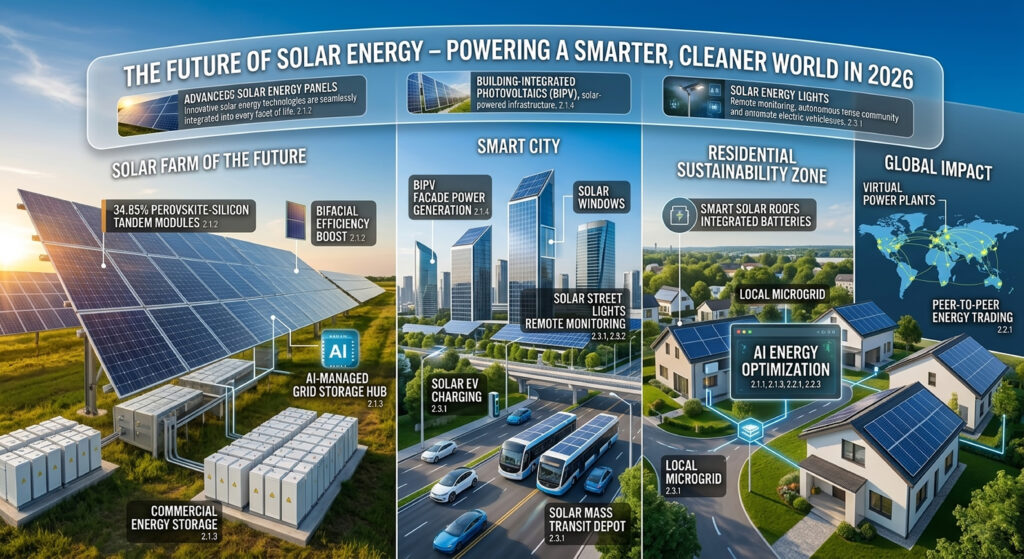
A Complete Guide to Clean and Smart Energy Solutions
Introduction.
From Alternative to Mainstream
For decades, solar energy was seen as an “alternative”—expensive, niche, and limited to environmentally conscious users. Today, it is rapidly becoming a mainstream power source. Falling costs, technological breakthroughs, and global climate goals have pushed solar energy to the center of the world’s energy transition.
The future of solar is not just about panels on rooftops. It is about smart systems, energy independence, advanced materials, and global accessibility. Understanding where solar energy is heading helps individuals, businesses, and governments prepare for a cleaner and more efficient future.
1. The Rapid Growth of Solar Energy
Solar energy is currently one of the fastest-growing energy sources in the world. Over the last decade, the cost of solar panels has dropped by more than 80%, making it more affordable than ever.
Why Solar Is Growing So Fast:
- Lower installation costs
- Government incentives and subsidies
- Rising electricity prices
- Global push to reduce carbon emissions
Countries like China, the United States, and India are investing heavily in solar infrastructure. Even developing regions are adopting solar because it offers a cheap and scalable solution where traditional power grids are weak.
2. Breakthrough Technologies Shaping the Future
The next phase of solar energy will be driven by innovation. Scientists and engineers are constantly improving efficiency, durability, and flexibility.
a) High-Efficiency Solar Panels
Traditional silicon panels convert around 15–22% of sunlight into electricity. New technologies, such as perovskite solar cells, promise efficiencies above 30%.
These advanced materials are:
- Lightweight
- Flexible
- Cheaper to produce
This means solar panels could soon be integrated into everyday surfaces like windows, walls, and even clothing.
b) Solar Storage (Battery Revolution)
One of solar energy’s biggest challenges is intermittency—it only produces power when the sun shines. The future solution lies in better storage systems.
Modern batteries, like lithium-ion and upcoming solid-state batteries, allow energy to be stored during the day and used at night.
Real-world example:
- Homeowners in many countries now use solar panels with battery systems to achieve partial or full energy independence
- Businesses reduce peak electricity costs by storing solar energy
As battery costs continue to drop, solar will become more reliable and practical for 24/7 use.
c) Smart Solar Systems (AI Integration)
Artificial intelligence is transforming how solar systems operate.
Smart solar systems can:
- Predict energy production based on weather
- Optimize energy usage in homes and industries
- Automatically switch between solar, battery, and grid power
This makes solar energy not just clean—but also intelligent and efficient.
3. Solar Energy in Everyday Life
The future of solar is about integration into daily living, not just separate installations.
a) Solar Homes
Modern homes are increasingly designed with solar in mind. Rooftop panels, solar water heaters, and battery systems are becoming standard features.
In some regions, net metering allows homeowners to sell excess electricity back to the grid, turning homes into mini power stations.
b) Solar Cities
Cities are beginning to adopt solar on a large scale:
- Solar-powered streetlights
- Solar charging stations for electric vehicles
- Solar-integrated public buildings
This reduces strain on national grids and lowers urban carbon emissions.
c) Portable Solar Solutions
Portable solar devices are becoming popular:
- Solar power banks
- Solar camping kits
- Emergency solar generators
These are especially useful in remote areas and during power outages, increasing energy accessibility worldwide.
4. Economic and Environmental Impact
a) Job Creation
The solar industry is creating millions of jobs globally, including:
- Installation technicians
- Engineers
- Maintenance professionals
- Manufacturing workers
As demand grows, the solar sector will continue to be a major source of employment.
b) Environmental Benefits
Solar energy significantly reduces greenhouse gas emissions.
Unlike fossil fuels, solar power:
- Produces no air pollution
- Requires minimal water
- Reduces dependence on non-renewable resources
This makes it essential for combating climate change.
c) Energy Independence
Countries that rely heavily on imported fuel can reduce dependence by investing in solar energy.
For individuals, solar means:
- Lower electricity bills
- Protection from rising energy costs
- Greater control over power usage
5. Challenges That Still Exist
Despite its advantages, solar energy faces several challenges:
a) Initial Installation Cost
Although prices have dropped, upfront costs can still be high for some households.
b) Weather Dependence
Solar energy production depends on sunlight, making it less effective in cloudy regions without storage solutions.
c) Space Requirements
Large solar farms require significant land, which can be a limitation in densely populated areas.
6. The Future Outlook: What’s Next?
The future of solar energy is promising and transformative.
Key Trends to Watch:
- Solar + Electric Vehicles (EVs): Charging cars directly from solar power
- Floating Solar Farms: Panels installed on water bodies to save land
- Space-Based Solar Power: Collecting solar energy in space and transmitting it to Earth (under research)
- Building-Integrated Solar: Solar panels built directly into construction materials
These innovations will make solar energy more efficient, accessible, and widespread.
7. Real-World Case Study
In countries like Germany and Australia, solar adoption is already high.
Example:
- Many homes in Australia generate more electricity than they consume
- Germany has successfully integrated solar into its national grid despite limited sunlight
These examples show that solar energy is not just theoretical—it is already working at scale.
Conclusion: A Solar-Powered Future
Solar energy is no longer just an option—it is becoming a necessity. As technology advances and costs continue to fall, solar will play a central role in shaping the future of energy.
The transition to solar is not only about saving the environment. It is about creating a smarter, more resilient, and economically sustainable world.
The question is no longer if solar energy will dominate—but how fast it will transform our lives.
Final Thought
“The future belongs to those who harness the power of the sun—not just for energy, but for a better way of living.”