
“Electric Vehicles 2026”, “EV Guide”, “Future of EVs”
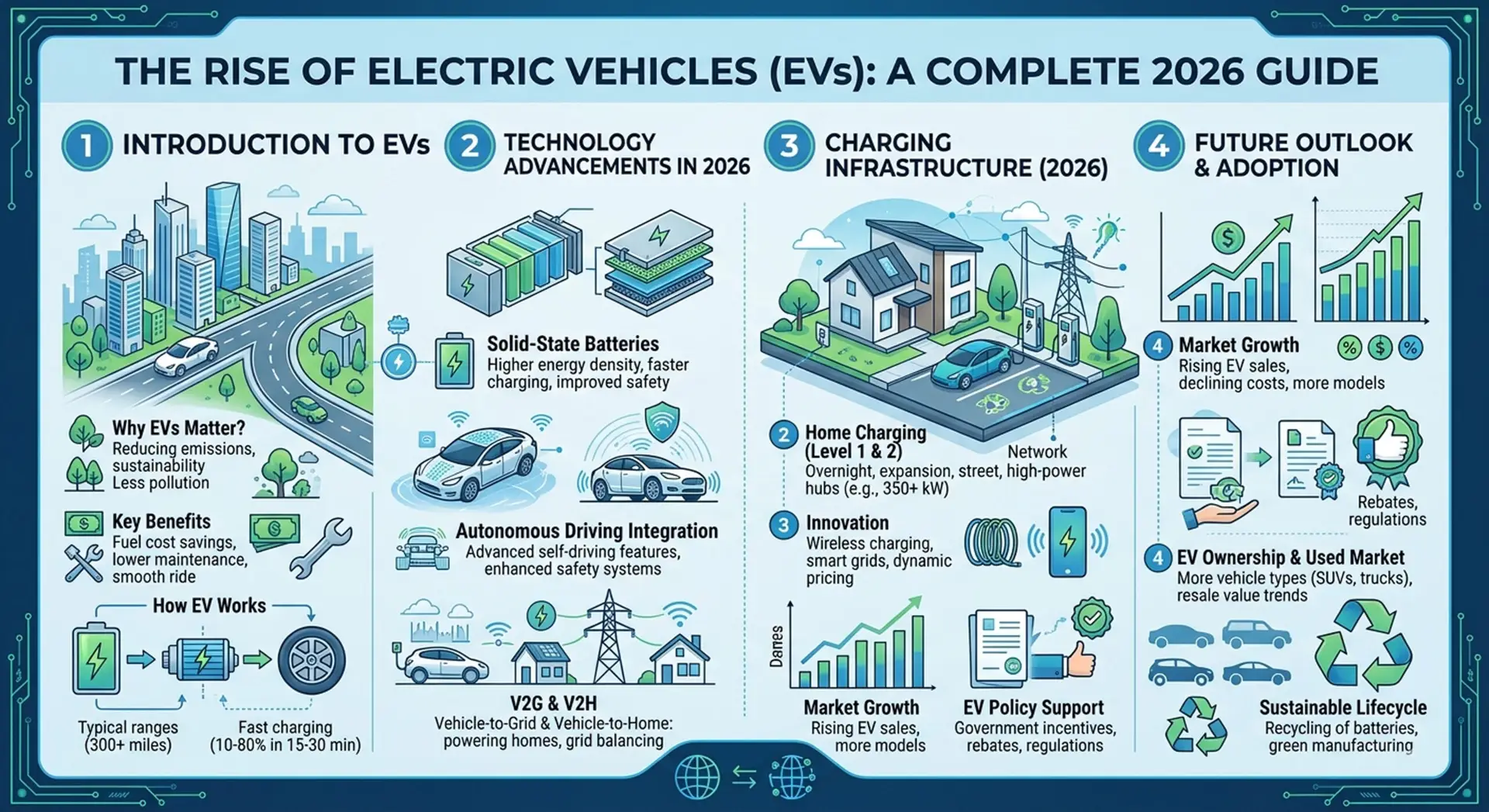
“Electric Vehicles 2026”, “EV Guide”, “Future of EVs”
Electric vehicles (EVs) are no longer a futuristic concept—they are rapidly becoming a central part of the global transportation system. From major cities to developing regions, EV adoption is accelerating due to environmental concerns, technological advancements, and changing consumer preferences. This article explores EVs in depth, including how they work, why they matter, real-world examples, current challenges, and what the future holds.
🚗 What Are Electric Vehicles?
Electric vehicles are cars that run on electricity instead of traditional fuels like petrol or diesel. They use electric motors powered by rechargeable batteries.
There are three main types of EVs:
- Battery Electric Vehicles (BEVs): Fully electric, no fuel engine (e.g., Tesla Model 3)
- Plug-in Hybrid Electric Vehicles (PHEVs): Combine electric motor with fuel engine
- Hybrid Electric Vehicles (HEVs): Use both systems but don’t require charging
Among these, BEVs are considered the future because they produce zero tailpipe emissions.
⚙️ How Do EVs Work?
At the core of every EV is a battery pack, an electric motor, and a controller.
- The battery stores electricity
- The controller regulates power flow
- The motor converts electricity into motion
Unlike combustion engines, EVs have fewer moving parts, which means:
- Less maintenance
- Quieter operation
- Higher efficiency
For example, a traditional engine wastes energy as heat, while EVs convert most of their energy directly into movement.
🌍 Why EVs Are Gaining Popularity
1. Environmental Benefits
EVs help reduce air pollution and greenhouse gas emissions. Cities with high traffic pollution are increasingly encouraging EV adoption.
Countries like Norway have already achieved over 80% EV sales due to strong policies and incentives.
2. Lower Running Costs
While EVs may have higher upfront costs, they are cheaper to run:
- Electricity is cheaper than fuel
- Fewer maintenance costs (no oil changes, fewer parts)
A real example: Many drivers report saving up to 40–60% annually on fuel and maintenance after switching to EVs.
3. Government Incentives
Governments worldwide are offering:
- Tax reductions
- Subsidies
- Free parking or toll benefits
For instance, countries like China and United States are investing billions into EV infrastructure.
4. Technological Advancements
Battery technology has improved significantly:
- Longer range (400–600 km per charge)
- Faster charging times
- Better durability
Companies like Tesla and BYD are leading innovation in this space.
🔋 Real-World Examples of EV Success
Tesla’s Global Impact
The Tesla Model Y became one of the best-selling cars globally, proving EVs can compete with traditional vehicles in performance and popularity.
China’s EV Boom
China is the largest EV market in the world. Companies like BYD are producing affordable EVs, making them accessible to millions.
EV Adoption in Developing Countries
In countries like India and Pakistan, electric bikes and small EVs are becoming popular due to rising fuel prices.
⚡ Charging Infrastructure: The Backbone of EVs
One of the most important aspects of EV growth is charging infrastructure.
Types of Charging:
- Home Charging: Slow but convenient
- Fast Charging Stations: Charge up to 80% in 20–40 minutes
- Ultra-fast Charging: New technology reducing time further
Major companies and governments are expanding charging networks globally.
⚠️ Challenges Facing EVs in 2026
Despite rapid growth, EVs still face several challenges:
1. Charging Availability
In many regions, especially rural areas, charging stations are still limited.
2. Battery Costs
Although prices are dropping, batteries still make up a large portion of EV costs.
3. Range Anxiety
Some users worry about running out of battery during long trips, although newer models are solving this issue.
4. Electricity Source
EVs are only truly “green” if the electricity comes from renewable sources. In countries relying on coal, the environmental benefit is reduced.
🔮 Future of Electric Vehicles
The future of EVs looks extremely promising.
1. Solid-State Batteries
These next-generation batteries will:
- Charge faster
- Last longer
- Provide greater range
2. Autonomous EVs
Self-driving electric cars are being developed by companies like Tesla and Waymo.
3. Expansion in Emerging Markets
Countries like Pakistan are expected to see rapid EV adoption as infrastructure improves and costs decrease.
4. Integration with Renewable Energy
EVs will increasingly connect with solar and wind energy systems, making transportation more sustainable.
📊 EVs vs Traditional Cars: A Quick Comparison
| Feature | EVs | Fuel Cars |
|---|---|---|
| Emissions | Zero tailpipe emissions | High CO₂ emissions |
| Running Cost | Low | High |
| Maintenance | Minimal | Frequent |
| Fuel/Energy | Electricity | Petrol/Diesel |
| Noise | Quiet | Loud |
💡 Final Thoughts
Electric vehicles are not just a trend—they represent a fundamental shift in how we think about transportation. With cleaner energy, lower costs, and rapid technological improvements, EVs are shaping a more sustainable future.
However, adoption must be supported by:
- Better infrastructure
- Policy support
- Public awareness
As we move forward, EVs will likely become the standard rather than the exception.
🚀 Conclusion
The transition to electric vehicles is already underway, and it’s accelerating faster than ever. Whether you’re an individual considering your next car or a business looking at future investments, understanding EVs is no longer optional—it’s essential.
The road ahead is electric—and it’s just getting started.