
One of the most common questions prospective hybrid car buyers ask is, “How long does a hybrid battery actually last?” While hybrid vehicles have become increasingly popular due to their fuel efficiency and environmental benefits, concerns about battery longevity remain a major factor in purchasing decisions. Many drivers worry that replacing a hybrid battery will be expensive or that the battery will fail sooner than expected.
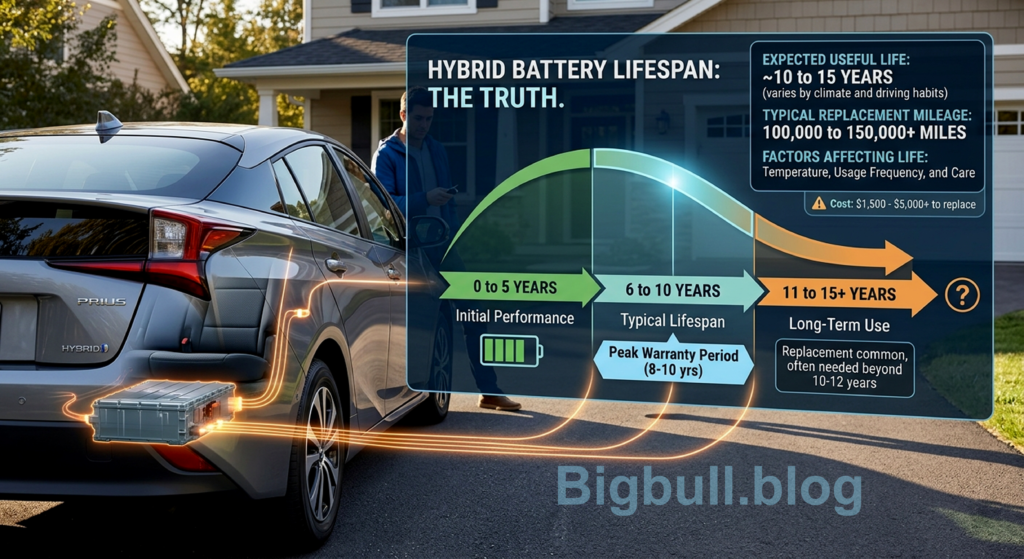
Hybrid Battery
The good news is that modern hybrid batteries are built to last much longer than most people think. In fact, many hybrid vehicles continue operating efficiently for well over 100,000 miles without experiencing significant battery problems. Understanding how hybrid batteries work, what impacts their lifespan, and what replacement costs to expect can help you make a more informed buying decision.
What Is a Hybrid Battery?
A hybrid battery is a rechargeable energy storage system that powers the electric motor in a hybrid vehicle. Unlike a conventional car battery, hybrid batteries are larger, more powerful, and specifically designed to work alongside a gasoline engine.
Hybrid batteries help improve fuel economy by storing energy recovered during braking and providing additional power during acceleration. This combination reduces fuel consumption and lowers emissions compared to traditional gasoline-powered vehicles.
How Long Does a Hybrid Battery Typically Last?
Most hybrid batteries are designed to last between:
- 8 to 15 years
- 100,000 to 200,000 miles
Many modern hybrids exceed these estimates, especially when properly maintained.
Manufacturers have invested heavily in battery technology, resulting in systems that can withstand years of daily driving without major degradation. Some hybrid owners report their batteries performing effectively even after 200,000 miles.
Manufacturer Battery Warranties
Most automakers offer extensive battery warranties that provide additional peace of mind.
Typical warranty coverage includes:
- 8 years or 100,000 miles
- Up to 10 years or 150,000 miles in certain regions
These warranties reflect manufacturers’ confidence in the durability of hybrid battery systems.
Table of Contents
Factors That Affect Hybrid Battery Life
Several factors influence how long a hybrid battery lasts.
Driving Habits
Frequent stop-and-go driving can actually benefit hybrid systems because regenerative braking continually recharges the battery.
Aggressive acceleration and excessive high-speed driving may place additional strain on battery components.
Climate Conditions
Extreme temperatures can impact battery performance.
Hot climates may accelerate battery degradation, while extremely cold temperatures can temporarily reduce battery efficiency.
Vehicle Maintenance
Proper maintenance plays an important role in battery longevity. Keeping cooling systems clean and ensuring proper airflow around battery components helps prevent overheating.
Mileage and Age
Like all batteries, hybrid batteries naturally degrade over time. Both vehicle age and mileage contribute to gradual reductions in battery capacity.
Signs Your Hybrid Battery May Be Failing
Hybrid batteries rarely fail without warning.
Common symptoms include:
Reduced Fuel Economy
A noticeable decrease in fuel efficiency is often one of the earliest signs of battery degradation.
Frequent Engine Usage
If the gasoline engine runs more often than usual, the battery may not be storing sufficient energy.
Battery Warning Lights
Dashboard warning indicators can signal battery performance issues that require professional diagnosis.
Reduced Acceleration
A weakened battery may struggle to provide additional power during acceleration.
Rapid Battery Charge Fluctuations
Sudden changes in battery charge levels may indicate deteriorating battery cells.
Can a Hybrid Battery Be Repaired?
In some cases, yes.
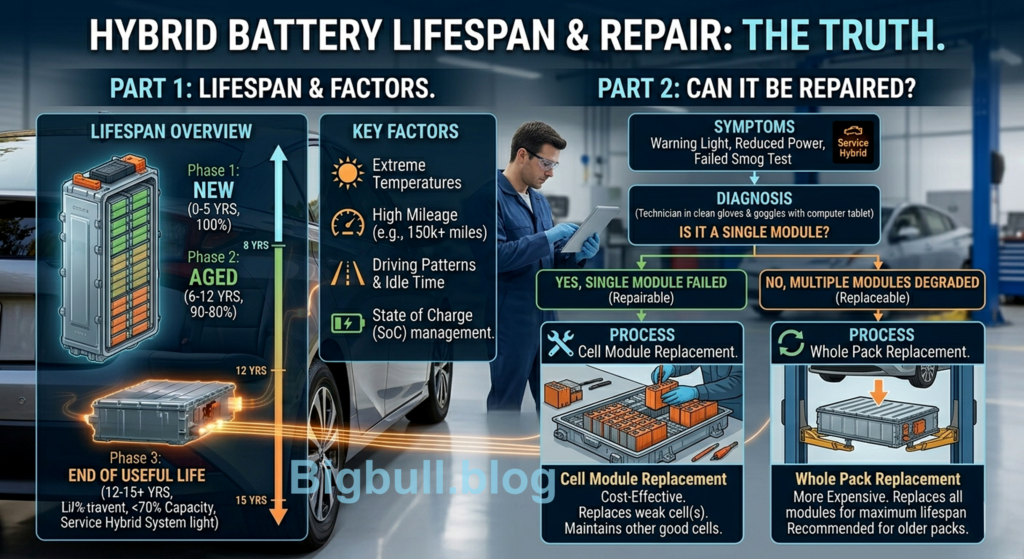
Not every battery issue requires a full replacement. Technicians can sometimes repair or replace individual battery modules rather than the entire battery pack.
Potential repair options include:
- Module replacement
- Battery reconditioning
- Electrical system repairs
- Cooling fan maintenance
These solutions can be significantly less expensive than complete battery replacement.
How Much Does Hybrid Battery Replacement Cost?
Battery replacement costs vary depending on:
- Vehicle make and model
- Battery type
- Labor rates
- Geographic location
Average replacement costs generally range from:
- $1,500 to $8,000
Luxury hybrid vehicles may have higher replacement costs.
Fortunately, many owners never need to replace their battery during their ownership period.
Are Hybrid Batteries Worth the Cost?
For most drivers, the answer is yes.
Although hybrid batteries add complexity and cost, they also contribute to substantial fuel savings throughout the life of the vehicle.
Benefits include:
- Improved fuel economy
- Lower fuel expenses
- Reduced emissions
- Increased efficiency
- Better resale value
Many owners recover battery-related costs through long-term fuel savings.
How Hybrid Batteries Compare to EV Batteries
Hybrid batteries and electric vehicle (EV) batteries serve different purposes.
Hybrid batteries are generally:
- Smaller
- Less expensive
- Subjected to less daily strain
EV batteries are larger and provide all vehicle propulsion, which can lead to different aging patterns.
Because hybrids use both gasoline and electric power, their batteries often experience less stress than fully electric vehicles.
Tips to Extend Hybrid Battery Life
Drivers can take several steps to maximize battery longevity.
Drive Regularly
Long periods of inactivity can negatively affect battery health.
Avoid Extreme Heat
Whenever possible, park in shaded or covered areas to reduce battery exposure to excessive temperatures.
Follow Maintenance Schedules
Routine inspections can identify issues before they become serious problems.
Keep Cooling Systems Clean
Battery cooling systems help regulate temperature and prevent overheating.
Use Smooth Driving Techniques
Gentle acceleration and braking reduce stress on battery components.
Are Modern Hybrid Batteries More Reliable?
Absolutely.
Battery technology has improved dramatically over the past two decades. Today’s hybrid systems are more durable, efficient, and reliable than earlier generations.
Automakers continue to refine battery chemistry, thermal management systems, and software controls to maximize lifespan and performance.
As a result, battery-related concerns have become far less common among modern hybrid owners.
Should Battery Lifespan Stop You From Buying a Hybrid?
For most buyers, battery lifespan should not be a major concern.
Modern hybrid batteries are engineered for long-term durability and are often protected by generous warranties. Most drivers will enjoy years of reliable performance before encountering any significant battery issues.
When evaluating a hybrid vehicle, it’s more important to consider:
- Overall reliability
- Fuel savings
- Ownership costs
- Warranty coverage
- Driving habits
In many cases, the benefits of hybrid ownership far outweigh the potential risks associated with battery replacement.
What Actually Determines Battery Lifespan
A few variables explain most of the difference between a battery that dies at 80,000 miles and one that’s still going strong at 250,000.
Battery chemistry matters. Older hybrids (roughly pre-2016) typically use nickel-metal hydride (NiMH) packs, while newer models increasingly use lithium-ion (Li-ion). Li-ion packs tend to hold capacity longer and handle heat slightly better, though NiMH packs have a long track record of reliability too — they’re just heavier and bulkier per unit of energy stored.
Heat is the biggest enemy. Battery chemistry degrades faster at high temperatures. Hybrids that spend their lives in hot climates, or are regularly parked in direct sun without shade, tend to show capacity loss sooner than the same model driven in a temperate region.
Driving style plays a role. Hybrid batteries are built around frequent partial charge-and-discharge cycles, not deep draining. Stop-and-go city driving, where the battery is constantly topped up and used, is actually gentler on the pack than long highway stretches where it sits mostly idle or extreme short trips where the engine never fully warms up.
Maintenance and software updates count. Hybrid systems rely on cooling fans (often pulling cabin air) to keep the battery within its ideal temperature range. A clogged battery cooling vent — frequently caused by pet hair or dust buildup — is one of the most common, and most preventable, causes of premature degradation.
Warranty Coverage: Your Built-In Safety Net
Before worrying about cost, check your warranty — it’s often more generous than people assume. Federal regulations require automakers to cover hybrid battery components for at least 8 years or 100,000 miles. In California and the other states that follow CARB emissions standards, that minimum jumps to 10 years or 150,000 miles.
Toyota took this further: starting with the 2020 model year, every new Toyota and Lexus hybrid battery carries a 10-year/150,000-mile warranty nationwide, regardless of state, and it transfers to subsequent owners if the car is sold. That’s a significant detail for used-hybrid shoppers — a battery warranty that follows the car, not the original buyer, meaningfully reduces the risk of buying used.
Other manufacturers vary, so it’s worth pulling up your specific warranty booklet rather than assuming coverage matches what a friend’s car has.
Signs Your Hybrid Battery Is Wearing Out
Capacity loss tends to show up gradually, through a few recognizable symptoms: a noticeable drop in fuel economy, the gas engine kicking in more frequently (or running almost constantly instead of cycling with the electric motor), reduced acceleration power, and a hybrid system warning light on the dash. None of these guarantees the battery itself has failed — a malfunctioning cooling fan, a software glitch, or a failing 12-volt battery can trigger similar symptoms — which is why a proper diagnostic from a hybrid-certified technician is worth doing before assuming the worst.
Final Thoughts
Hybrid batteries last much longer than many consumers expect. With typical lifespans ranging from 100,000 to 200,000 miles and warranties often covering eight years or more, modern hybrid vehicles offer dependable long-term performance.
While battery replacement costs can be significant, failures are relatively uncommon, especially in newer models. For drivers seeking better fuel efficiency, lower emissions, and reduced operating costs, hybrid vehicles remain one of the smartest automotive investments available today.
FAQ
How many years does a hybrid battery last?
Most hybrid batteries last between 8 and 15 years, depending on driving habits, maintenance, and environmental conditions.
Can a hybrid battery last 200,000 miles?
Yes. Many modern hybrid batteries continue operating effectively beyond 200,000 miles with proper care.
What happens when a hybrid battery dies?
The vehicle may experience reduced fuel economy, performance issues, warning lights, or may require battery repair or replacement.
Is replacing a hybrid battery expensive?
Replacement costs typically range from $1,500 to $8,000 depending on the vehicle model and battery type.
Do hybrid batteries fail suddenly?
Most batteries show warning signs before failure, including reduced fuel economy and dashboard warning lights.
Are hybrid batteries covered under warranty?
Yes. Most manufacturers provide battery warranties ranging from 8 years/100,000 miles to 10 years/150,000 miles.
Can a hybrid battery be repaired instead of replaced?
In some cases, technicians can repair or replace individual battery modules, reducing overall costs.
Is buying a used hybrid risky because of the battery?
Not necessarily. Many hybrid batteries remain reliable for well over 100,000 miles. Buyers should review maintenance records and battery health reports before purchasing.